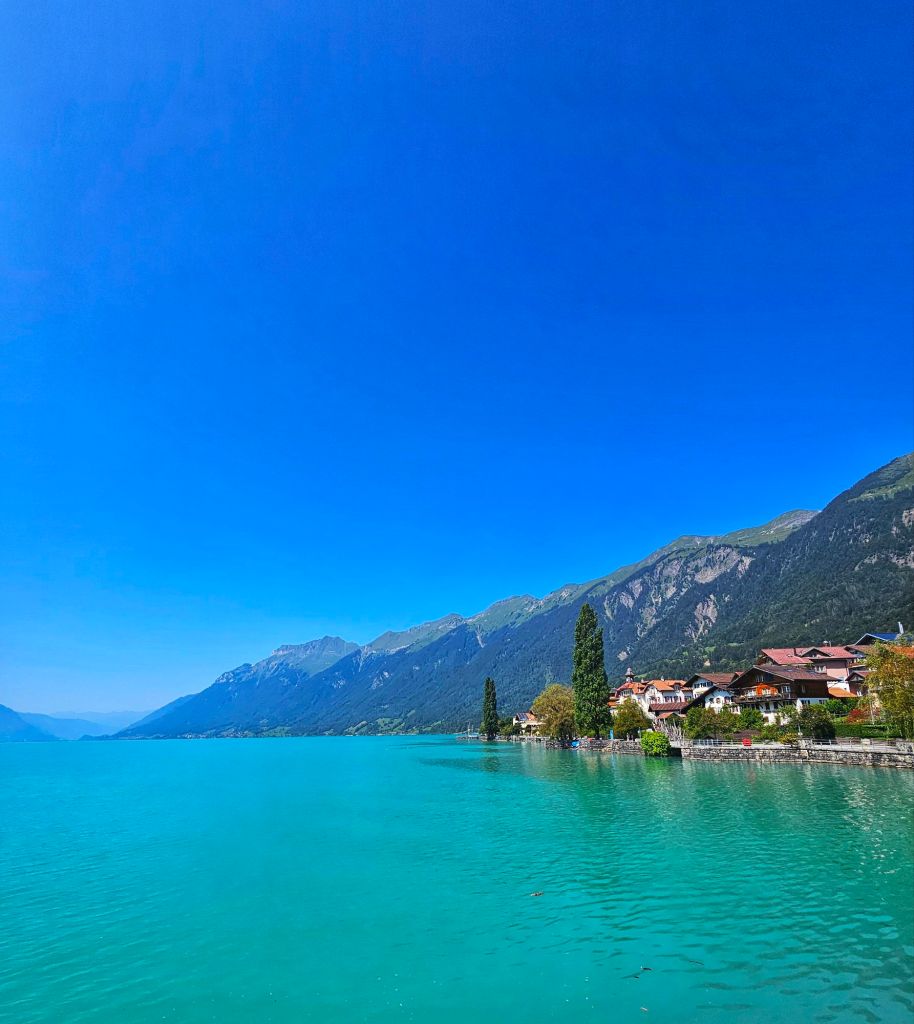

Want to hit the road in Europe this year with the kids?
Read on to find out our top tips for driving in France and other European countries
This post is packed full of information to make sure you have a smooth road trip abroad. Please don’t be put off by how much there is to know; it really is simple if you take it step by step. It is a great way to holiday with your kids!
We have driven from the UK, through France, numerous times now, with our kids when they were babies, toddlers, to now, primary school age. Not only France, we have driven our car to Austria, Germany, Switzerland, and Italy too!
We love a road trip and, after 7 years of driving on the continent, we have got it down pat now! For us, the trip is as much a part of the holiday as the destination. Also, as a family of four, it often works out tons cheaper than flying, and it tends to be more environmentally friendly. Win win!
We’ve picked up some tips along the way that we can’t wait to share with you, so you can learn from our successes (and mistakes!)
Ensure you have a fun filled, memorable road trip with your family in Europe this year with these essential tips;
France: The Basics
The basic must do’s to ensure you are safe and meeting all the legal requirements when driving in France.
We have provided a good overview below, but please refer to the AA website here for full details.
Car seats
If you are driving from the UK and crossing on the ferry/ tunnel then this is likely to be sorted already and will be fine as French law is similar to the UK and have restrictions on weight for babies, toddlers, and children regarding car seats.
If you are planning to fly and rent a car there, make sure you have a plan on renting or taking car seats with you.
Babies must be rear facing up to 13kg, Children up to 18kg must be in a child seat, and children from 15 kg, up to age 10 should be in a booster seat.
Breakdown Kit
When driving in France, it is a legal requirement to have a warning triangle and reflective jackets for every family member, including children, in case of a breakdown. You can buy these kits easily on Amazon and just have them in the boot of your car, all ready to go.
Documents
You will need to have the physical copies of your vehicle insurance and vehicle registration on you when driving in France (not just online/ email versions). Also, make sure you have your photocard driving license. You may be asked to produce them if stopped by the police for any reason.
Uk Sticker and Headlamp Deflectors
You will need a UK sticker for the back of your car and headlamp deflectors, which are stickers you put on the headlamps of left hand drive vehicles.
Don’t get fined!
There are a few rules (similar to the UK congestion charge/ tax) that, if you are not clued up on, can lead to large fines when driving in Europe. One trip, we returned home to a surprise £185 fine for driving on a 2 mile stretch of Swiss motorway as we had not paid the proper fee without realising. Read on to make sure you avoid this!
In France – Get a Crit Air Sticker.
This is like a congestion charge. You must apply for a sticker in the UK as it is sent to your home address. You cannot get one if you are already on holiday. Ours came within a week of ordering it.
You may not need one depending on where you are going, BUT, it’s complicated to work out which cities/ roads and zones need stickers, and if you took the wrong exit and ended up in a congestion zone by mistake, without a sticker you could end up with a fine. They are only 5 Euro, and so we advise getting one just in case; better to be safe than sorry! Click the website here to buy one. They are valid for the life of your vehicle, so once its done, its sorted for multiple trips.
In Europe – If you are planning on crossing borders into different countries in Europe, make sure you have researched their rules around vignettes. For example, when we drove in Austria and Switzerland, we needed to purchase a vignette at the border, which is like a road tax, and display the sticker on the windscreen. Each vignette is valid for that year (e.g. 2024) and will need to be repurchased for subsequent years. They are quite pricey (Approx. 40 Euro) but a lot less than the fine will be.
Make sure you find a proper border crossing and buy a vignette. We ended up on a Swiss motorway on our journey from Austria, without realising we had passed through a quiet unmanned section of border and had not purchased a vignette, leading to a hefty fine when we returned home!
Tolls
If you are driving in France, you are probably going to end up taking a toll road, especially if you are driving to the south, when the tolls roads save hours on end in driving time.
The tolls are expensive and quickly add up. We budgeted about 200 – 300 GBP for tolls in France, to Provence, and back to Calais. We don’t always spend that, but we like to know the expense is taken into account in our holiday budget.
We have managed to avoid tolls when holidaying in the north of France and only added 30/ 40 minutes of driving time but when heading to mid/ South of France, the difference can be 4, 5 , 6 + hours in driving!
We learnt after our first trip that in order to avoid queues and getting flustered at the toll booth, it was best to get an E tag for the tolls.
The toll wouldn’t take my credit card, and we couldn’t speak French well enough to communicate with the operator/ intercom to sort it out, all with a que of beeping cars behind us!
All this is avoided with an E tag. You can set up an account from home. The E tag is sent to your home, you hang it on your rear view mirror and it is automatically read when driving through the toll booth, and the toll charge is automatically taken from a linked bank account. So. Much. Easier! Definitely recommend.
Get an E tag here.
Breakdown Cover
A no-brainer. Make sure you have European breakdown cover in your own or rented vehicle. Make sure you are fully covered should a breakdown happen. I’m not sure how much getting a car from France back to the UK would be, but I’m assuming it would be a lot! Ouch.
Top tips
1. Learn some basic French.
Now I know Bonjour, Au Revoir, and that’s it! But we do have some simple phrases saved and written down, such as: I speak no French, Do you speak English, my car is broken down, my car needs recovery, my location is…..
You could be broken down, with breakdown cover, but have to speak to a local mechanic/ recovery person who will most likely speak French only. It happened to a friend of ours, who rang the number for their roadside assistance, and they had a hell of a time trying to communicate! Be prepared in case your phone battery dies or you can not rely on Google translate ( this has happened to us as well)
Basically, don’t assume people will speak English well, or at all ( and why they should they in France, to be fair). We were not used to it as in Germany and Switzerland we found most people spoke to us in English and we became complacent travellers! This goes for ordering food, buying things from shops etc, as well.
2. Sort out your data
We thought we could rely on our phone to automatically work straight off the ferry and would sort a French SIM out later for cheaper browsing, however, neither of our phones worked and we needed the sat navigation straight away. We ended up adding hours to our journey and getting lost as we didn’t have data to access our sat nav straight away! Needless to say, we have a roaming package paid for and ready to go prior to leaving the UK now.
3. Make sure you know the French for Petrol and Diesel
You don’t want to mix that up at the pumps! Diesel is Gazole. Petrol is Essence.
4. Top up fuel regularly.
The first time we went to France, we drove past lots of fuel stations and thought we would stop at a later point…. at which time there were no fuel stations for hours!! Google Maps did not help us. There were none along the route quick enough. We ended up taking a lengthy detour off the motorway to find fuel, to make sure we didn’t run out. I’m not sure why there were fewer fuel stations along the route the further south we went, but now, we never let the tank go past halfway and stop and fill up regularly.
We also have had our card declined at a few E’leclerk fuel stations on different trips, the latest being 2024 ( we think because it was a foreign card). It was quite strange as it doesn’t happen with any other fuel station there, so thought it was worth noting.
5. Take loads of snacks
This is probably telling your grandma to suck eggs if you are a parent! But we had so many snacks on hand for the kids to get them through the long drive. I took more than I thought I would need, but they ate them all! You can pick up crisps and sweets from service stations, of course, but have healthy stuff from home prepared as well that is a bit more substantial, so they don’t end up feeling sickly and gross.
6. Stop every 2 hours.
My husband has a tendency to push on and get more miles under our belt if no one needs the toilet or isn’t complaining. However, I insist we stop every 2 hours so he can have a break from driving, the kids can stretch there legs and it just keeps everyone happier for longer, less exhausted from the trip, and means you don’t get to that stage where everyone is irritable and has lost it before we stop.
7. Don’t forget about in car entertainment
We don’t use screens on our road trips when we can help it. The exception would be when we are stuck in traffic (Dover, I’m talking to you!), and in those cases when we have been in traffic jams for hours we do let the kids watch YouTube for a bit on our phones. We like to encourage the kids to do other activities in the car, and it also helps with keeping travel sickness at bay if they aren’t looking at a screen ( realise this is just our kids; if tablets work for you then why the heck not!)
Our kids are primary school ages and we give them a lego magazine, fidget toys and teddies and luckily, they play happily together most of the way, good old eye spy or they spend a lot of time in a daydream looking out of the window and coming up with stories.
When they were toddlers, we relied more heavily on them napping a lot during the journey, and also, they would have the tablet much more as kids that age are so much harder to keep entertained.
The French service stations/ rest areas (aires) are often great for running around, with green spaces and play areas. The Aires on the toll roads tend to be nicer than the standard roads.
So that is the end of our top tips for driving in France and Europe!
Does anybody else have road trips in Europe from the UK or further afield? Let me know in the comments and any tips you would like to add!
***

Hi! I’m Lizzie, a mum of two living in the Cotswolds. Here on Travel Happy Family, I share all of our travels with you, where we’ve been, how we got there, and how much it cost!
Happy travels! Xxx




 Travel Happy Family
Leave a comment