
Avoid these common tourist errors – learn from our experiences. In other words, we’ve made these mistakes so you don’t have to!
Travelling to Japan is amazing. It’s exciting, unique, and unforgettable, but navigating the country’s customs and traditions can be tricky for first-time visitors. We’ve been there—made the mistakes, faced the awkward moments—and now we’re here to help you avoid them. In this post, we’ll share our experiences as tourists in Japan in this ultimate list of Dos and Don’ts!
Do be mindful of Tattoos
Tattoos are often looked down on and carry a certain stigma in Japan due to the historic association of tattoos with Japanese organised crime (The Yakusa) and also the association with crime, violence and punishment – they were used as branding for criminals in the past.
This is something I read up on online before going, and the advice was conflicting – some articles and blogs saying that stigma around tattoos was a thing of the past, others saying it is still very persistent.
After our own experience, I would say treat displaying your tattoos with caution. While it is very likely to be fine to have tattoos on display, especially in cities, tattoos may still cause a bit of upset depending on where you go and what you are doing.
In Tokyo, we saw more than an occasional person displaying their tattoos, both Japanese and western foreigners. It didn’t seem to cause to much of a stir, and I expect being a vibrant busy city with higher exposure to foreign cultures, and a younger, more liberal population have contributed to a more accepting stance on tattoos.
This more lenient stance made me a little complacent. I have a small tattoo on my back that is generally covered by clothing.
When I visited a public Onsen in Takamatsu, a city in Shokoku (but not a typical tourist destination), there was definitely a negative response to my tattoo.
While staying with a family as part of a home stay, we were taken to the local Onsen, where my husband James and our host went in the the male onsen, and I went alone in to the female onsen.
In the onsen, after washing and following the onsen protol, I entered the water without much notice taken of me.
I have long hair that covers my tattoo, but once I got hot and tied up my hair, my tattoo became visible. The busy onsen immediately emptied, and, although not a word was said, it was clear I was being avoided, shunned, and people refused to make eye contact with me. There were women with their children, shielding their children from looking at me.
It was extremely awkward, and I felt very sorry for the host I came with as I expect I had really embarrassed him due to this cultural oversite.
I had honestly forgotten all about the small tattoo but this experience made me very careful about showing it in public spaces whilst we were in Japan, especially in rural areas or outside of Tokyo.
While in Tokyo, you’re unlikely to encounter issues with tattoos, especially as a foreigner, where they are often seen as a form of fashion and self-expression. However, it’s still important to be mindful that certain places—like gyms, onsen, and even some bars and restaurants—may have “no tattoos” signs displayed and they can still carry a stigma.
Personally if you are a person with tattoos travelling in Japan, I would be mindful of there complicated history in the country, and if in doubt, cover up to be less conspicuous. In a country where attitudes towards body art and tattoos are changing, in some places it is still taboo. You could always email ahead to particular places like Onsen to double-check to be on the safe side!
Don’t miss the high tech toilets
This is a given really- it is pretty much impossible to miss the famous high tech toilets of Japan!
It was a classic example of those little cultural differences that seem so small but are really noticeable!
The toilets we used in guest houses, hostels, shopping centres, and tourist destinations all had various levels of toilet- tech on the go.
Most toilets had sound effects, temperature settings, automatic scents released but to name a few – as well as coming with a control panel with more buttons than my laptop (and of course being in Japanese characters I had no idea what any of the were for).
When we stayed in guest houses and hostels without a high tech toilets, they were often decorated with fabrics, cushions and decorations to make them more fancy – going to the toilet and seeing what each one had on offer became a holiday activity in itself!
The toilets of Japan are a definite cultural quirk that I absolutely loved – one of those funny unique things that make travelling so much fun.
Do visit an onsen
An onsen is a Japanese hot spring bath, perfect for relaxing in natural, mineral-rich water.
It is also important to be aware that in general, when using an onsen, you are required to be naked, and swim suits are not allowed – they are not seen as clean, trapping soap and dirt.
This practice is totally normal in Japan, and attitudes around nudity in the onsen are very relaxed.
Found in scenic spots like mountains or forests (we visited lots in Kyushu), these baths are famous for their health benefits, like soothing sore muscles and relieving stress.
Before hopping in, you’ll need to throughly wash and shower to keep the communal space clean, which is important in showing respect to the ritual and tradition of the onsen.
Then soak in total peace!
Whether indoors or outdoors, visiting an onsen is a must-try experience for a true taste of Japanese culture and relaxation. There are many different types of onsen – in the public baths, we saw hot pools, warm pools, and pools with different minerals such as a sulphur bath and an iron bath. There was even an electric onsen with an electrical pulse through the water, but I didn’t fancy the sound of that one!
We personally loved the outdoor onsen we tried in Yufuin – it felt like a proper day at the spa with beautiful mountain views and nature all around us.
We have also tried public onsen, which are communal, and which we had to be totally naked to enter the water – this level of being comfortable in my own skin does not come easily to this repressed English lady! So for that reason, we tended to stick to private onsen after this – as well as my issue with my Tattoo as described earlier.
Don’t eat when walking
Eating and drinking while walking is something that is generally considered rude in Japan and is something to be mindful of, especially if you are travelling with small children (mine permanently used to have a snack on the go!)
When at home, I can often be found walking in the park, drinking my coffee as I go along, often snacking on a pastry too, or a packet of crisps on the go at lunch if I am in a rush.
Especially when the kids were little, they would often be found wandering along outside, snack in hand such as holding a biscuit (more often than not a bribe!)
In Japanese culture, it’s seen as more respectful and polite to sit down and enjoy your food rather than eat on the go.
This is especially true in public spaces like streets and trains. People in Japan prefer to maintain cleanliness and avoid causing inconvenience to others. We found this out when travelling about, rushing to make our train connections and wanted to eat our lunch at the station while waiting for our next train. We noticed that we hadn’t seen anyone eating on the whole trip apart from in restaurants, and we had a few side eyes thrown our way when we were getting food out. So, a quick google confirmed the feeling that something was off about eating in public.
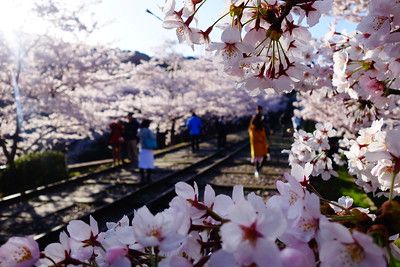
That said, exceptions are made in certain casual settings, like at festivals or near food stalls, where it’s more common to see people eating while standing or walking nearby. The Japanese also love a picnic, and it is common to see people enjoying lunch and dinner in the park under the cherry blossoms during Hanami. Just don’t wolf down your lunch on the go!
Do take your rubbish home
We quickly noticed when out and about all day, after sitting and enjoying our picnics, that we could not find a bin anywhere! We kept looking but came to realise that there are very few public bins in Japan.
Apparently, this is because people are expected to take their rubbish with them. Also, google told us that after some incidents involving explosives dumped in bins in the 90s, a lot of public bins were removed, especially in busy areas.
It’s all about keeping things clean and safe, and most people just carry their rubbish until they can throw it away at home. It works because everyone pitches in to keep public spaces tidy! It’s something we really noticed – at home in the UK, I see a lot of overflowing bins and rubbish left on the floor, but pretty much everywhere we went in Japan was clean and litter free (noticeably no graffiti either).
We got the impression that a communal respect of outdoor space was an ingrained part of the culture.
Don’t tip in a restaurant
Now this is a funny one and is something that is really different to any other country I have visited, where either tipping is expected, or when it isn’t expected, is still appreciated as a bonus and thank you for good service.
However! We soon learnt this wasn’t the case in Japan when we were chased down the road by the restaurant staff with the tip we had left on the table, and they actually seemed noticeably upset until we had accepted the extra money back.
We were confused to say the least, but we asked the hostel staff about it when we got back and there explained that tipping in Japan is seen as rude at worst, and totally confusing and unnecessary at best.
Tipping in Japan is considered rude because providing excellent service is viewed as a standard part of the job, and workers take pride in their work. It can imply that staff aren’t adequately compensated, which isn’t the case. Also the Japanese culture values respect and humility, so offering a tip may come across as condescending. Tipping can also confuse, as they may not know how to respond. Instead of tipping, a simple “thank you” is appreciated, as good service is its own reward.
Do take off your shoes
Every place we stayed in Japan had a neat pile of shoes in the entrance way, signalling to us that we were required to take off our shoes. We also saw this in some temples and restaurants – basically whenever we saw shoes at an entrance way we followed suit and took off our shoes, taking care to leave them neatly and to leave them pointing the same way as everybody else was.
We often were given slippers to wear inside and also asked to change from the regular inside slippers to special bathroom slippers when entering the toilet!
It is an important part of the culture rooted in cleanliness and respect, and I’ve also read to preserve the traditional tatami floors which are made of straw and are sensitive to dirt and moisture.
Don’t stress about how to bow
Before we went to Japan, we knew that bowing was a big part of the culture and my husband was particularly worried about whether we should be bowing or not. Was it rude not to bow, or should we be bowing in a specific way?
We shouldn’t have worried. We found that the Japanese people did not expect us, as foreign visitors to bow or to know the correct protocol for bowing and the nuances of what different bows mean (there are several different types of bow based on degrees, and how long).
Bowing is a nice respectful gesture that is well received and we did return bows to people when we thought it was appropriate, but it never felt like ‘a thing’ and we weren’t self conscious about it. We did however end up in a ‘bow -off’ with a Japanese man; whenever we bowed back to him he bowed lower again and so it continued for a while – which was quite sweet!
Do slurp your noodles!
I have been brought up in the UK, where if I was caught slurping wet food such as pasta, noodles or soup as a child I was very soon told off for having no table manners!
so, imagine our surprise when our host on a home stay took us on a tour of his favourite udon noodle restaurants, and everybody in there was slurping as loud as possible! It was definitely a culture shock, and we were encouraged to eat our food as nosily as possible, too! Apparently, it showed appreciation for the cooking and is a way to enhance the flavour of the food and to express your enjoyment.
It is a traditional way to eat these types of foods, however I must admit, I just couldn’t get used to it – my social conditioning from childhood is too ingrained! My husband however, had no problem adapting to this cultural practice and enjoyed slurping down his noodles as loudly as possible (and now I have to remind him not to do this back home!)
Also, a note to add; this is generally only reserved for noodles in a soup and is not generally practiced with rice, meat and vegetables dishes.
To conclude, our thoughts were that when travelling in Japan, being mindful of local etiquette can make your trip even more enjoyable. Simple things like bowing in greeting, taking off your shoes before entering homes, and respecting personal space can go a long way. The people and the fascinating culture are what make Japan a truly special and unique travel destination, and we hope these little anedotes of ours gondome way to helping you enjoy your time exploring this amazing country!
…



 Travel Happy Family
Leave a comment