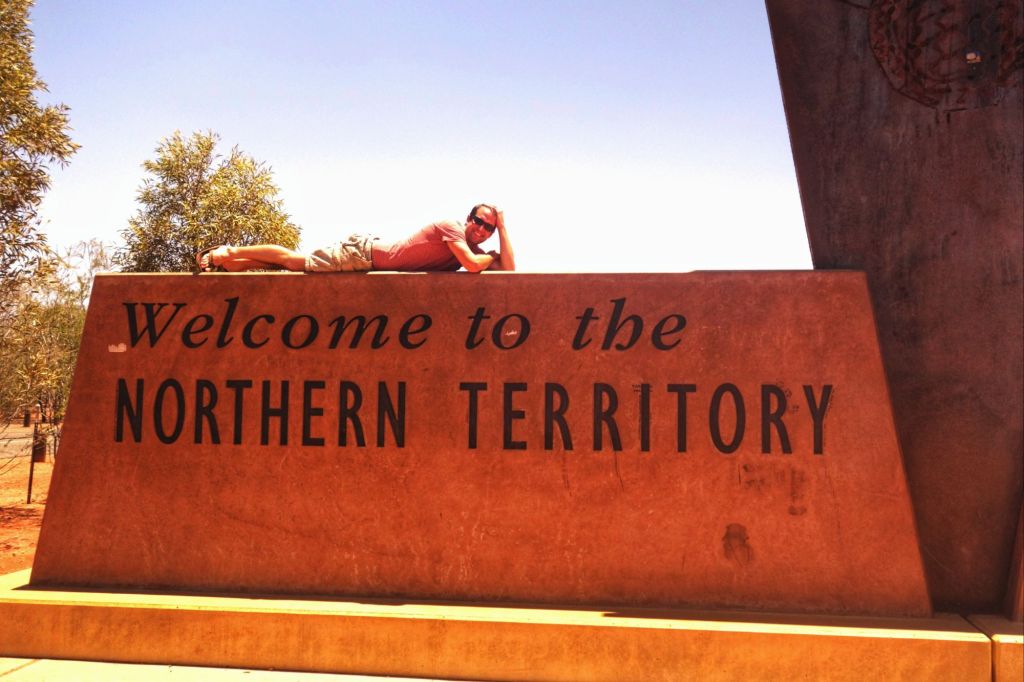
Fewer foreign backpackers venture into the Northern Territory compared to the other states – it’s far away, has a harsh climate and many have the perception that the remote location means a lack of convinience and modern amenities.
We made the trek to the Northern Territory, and we are so glad we did – we experience awe inspiring landscapes, the kind you can imagine is like nowhere else on earth.
We felt true freedom, adventure, and wonder at vast starry skies, red desert, and the unparalleled experiences of seeing geological wonders in real life.
We would encourage anyone considering visiting the Northern Territory of going for it – have a real outback adventure you can treasure forever.
AT A GLANCE:
🔺️Visit Uluru
🥾 Hike King’s Canyon
🌄 Explore Kakadu National Park
🛶 Canoe in Katherine Gorge
🐊 Wildlife Spotting Tours
Things to do in the Northern Territory
- Drive
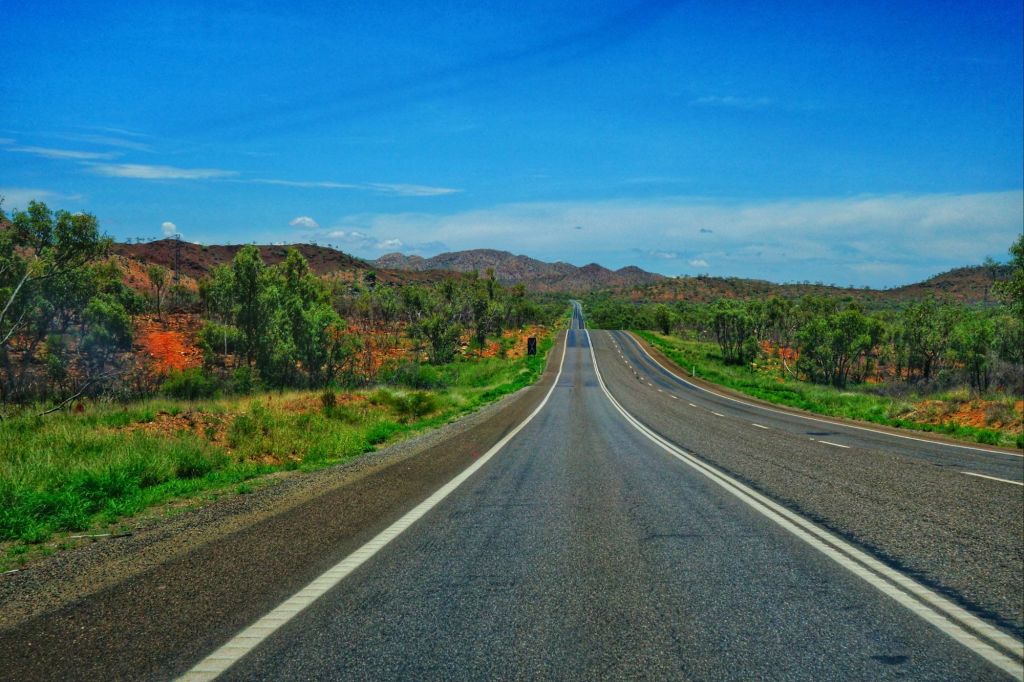
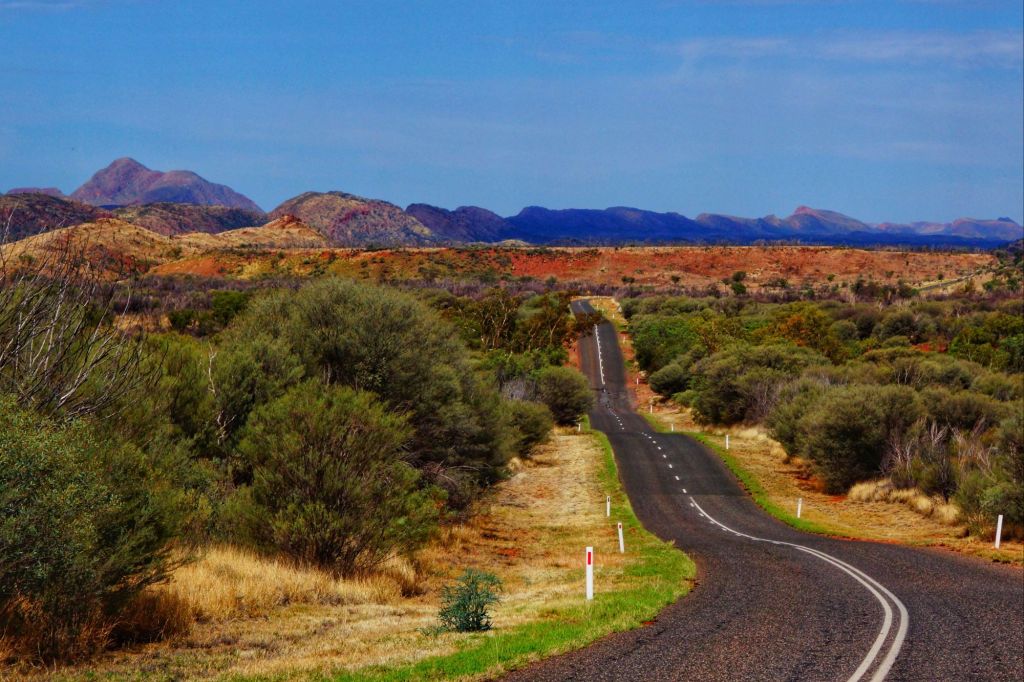
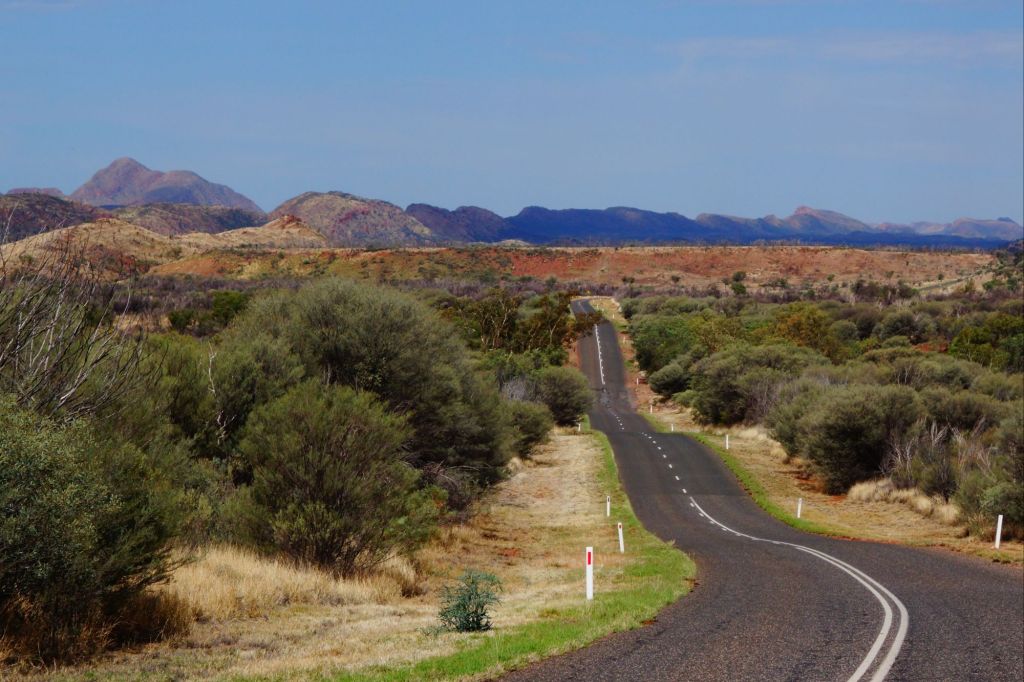
Driving around the Northern Territory is hands-down the best way to see everything this amazing region has to offer. As you can imagine, covering such vast distances and remote locations would not be practical on public transport and definitely not with kids, in our opinion. With epic roads like the Stuart Highway and the Red Centre Way, you can go at your own pace and reach iconic spots like Uluru, Kakadu, and Nitmiluk Gorge. The open roads are a dream—minimal traffic, big skies, and even some stretches with no speed limits.
2. Uluru
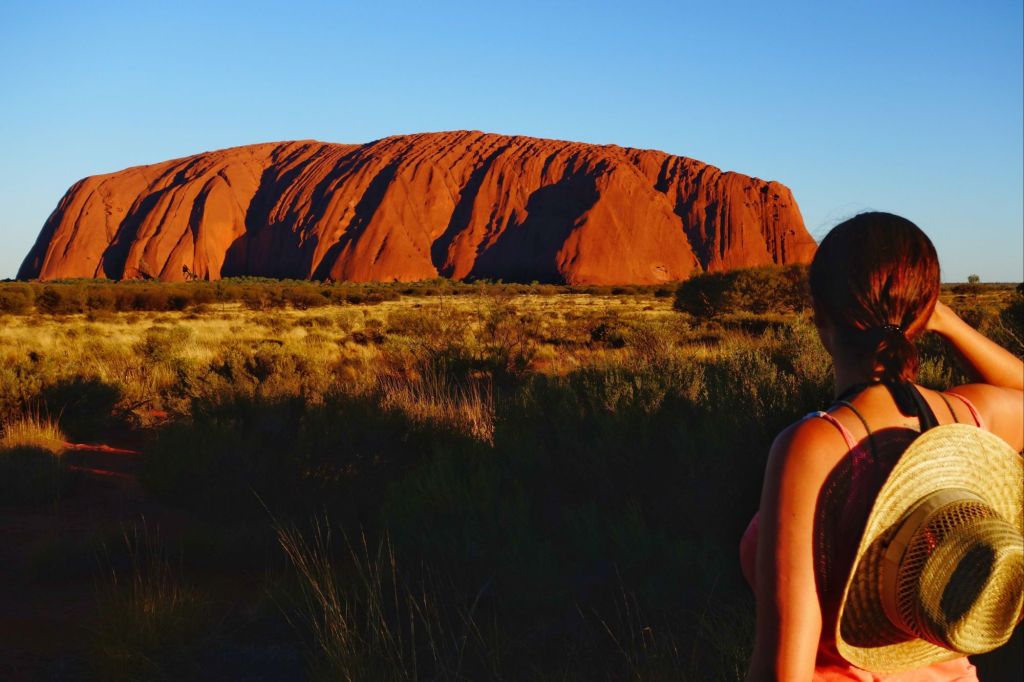
This absolute icon and world geological marvel is what drew us to the northern territory (although we discovered lots more as well), and it did not disappoint.
There was no way we were travelling all the way to Australia and missing its most famous landmark, so we made the long drive down the Stuart Highway and spent 2 days exploring the area (which included nearby Kata Tjuta)
The massive sandstone monolith Uluru, which is also known as Ayers Rock, appears to be different colours at different times of the day – we went to walk around it in the daylight (the heat was brutal) and later in the evening pulled out our camping chairs, coolbox and watched the sunset from one of the viewing area where you can park your car – we got there in good time to make sure we got a good spot.
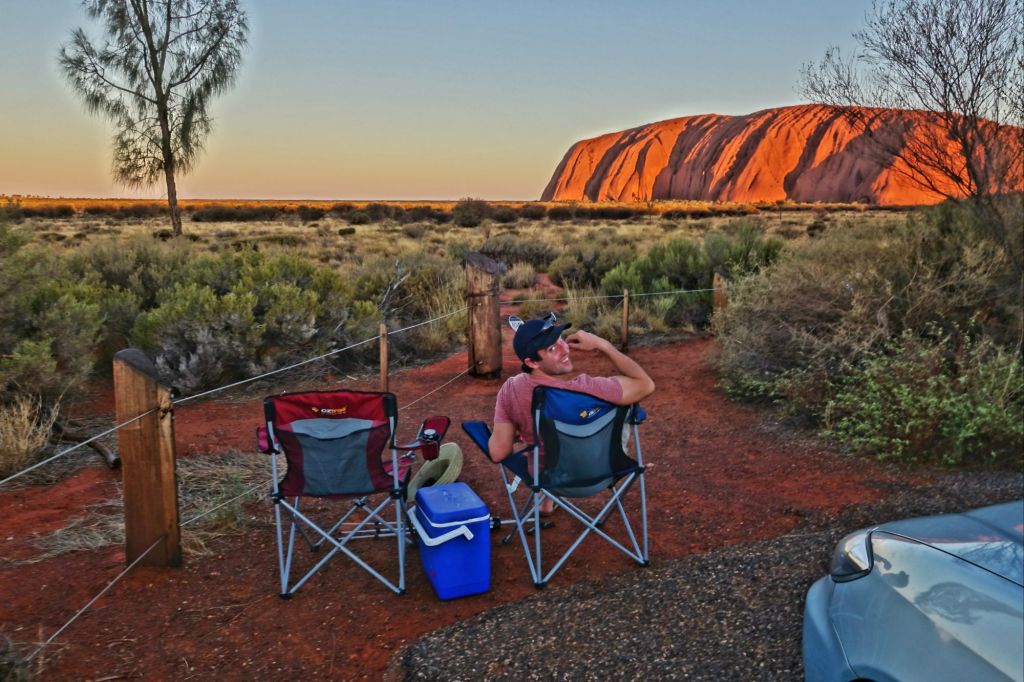
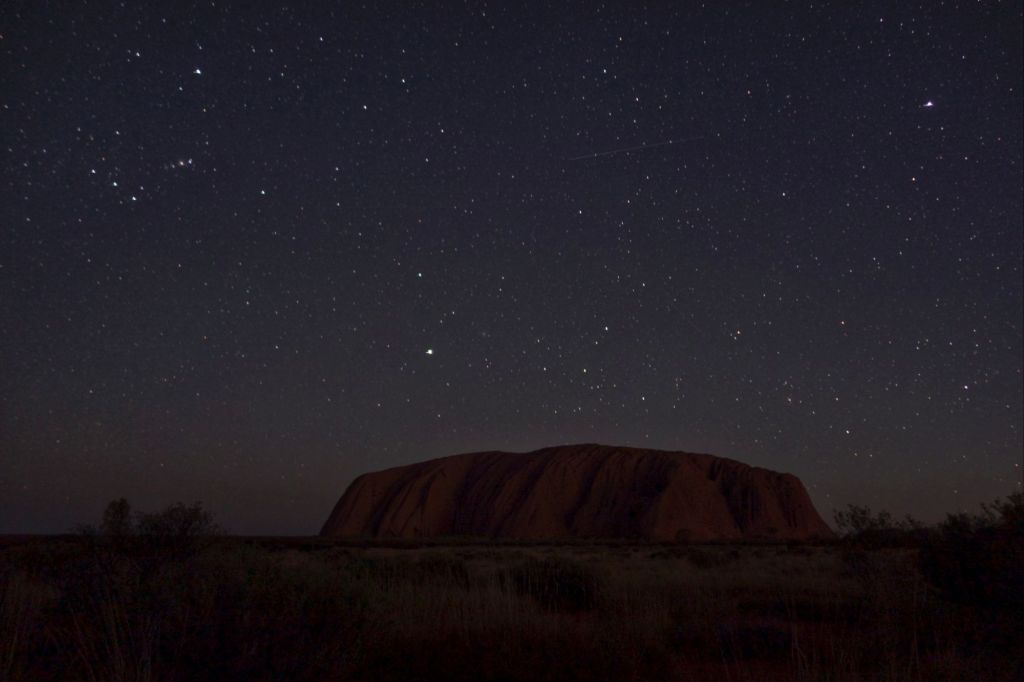
Sunrise and sunsets are the most popular times as the light is just so beautiful – I would avoid midday if you can as it gets super hot quickly. We also stuck around to see the stars come out, which was a real treat as well. They were so vibrant, and so many – so mach more than we have ever seen at home on the UK
We went mid – December, summer, and we did find it extremely hot – (we also camped, which was also bit of an experience! It was actually fine, but ONLY with an electric powered tent site, we had the fan on while we slept. We foolishly had tried wild Outback camping on the way down the Stuart Highway on route to Uluru, and had to drive through the night as we weren’t so hot we couldn’t sleep at all!)
There is a walk around the perimitere of Uluru (6.6k), but due to the heat, we only went a short way and then doubled back on ourselves. There are lots of warnings about heat stroke and dehydration – take it seriously – this climate takes no prisoners. The walk is best started early in the morning, and make sure you have lots and lots of water on you. I also think visiting May – September, which is advised as the ideal tourist season here, would be more comfortable for walking and exploring.
Check out the official website here for info on this walk and other walking routes in the Uluru – Kata Tjuta National Park.
Can I climb Uluru?
No. Climbing Uluru has been banned since 2017 so safety, spiritual and environmental reasons.
Uluru is a National park that requires a parks pass that can be purchased online here.
3. Kata Tjuta
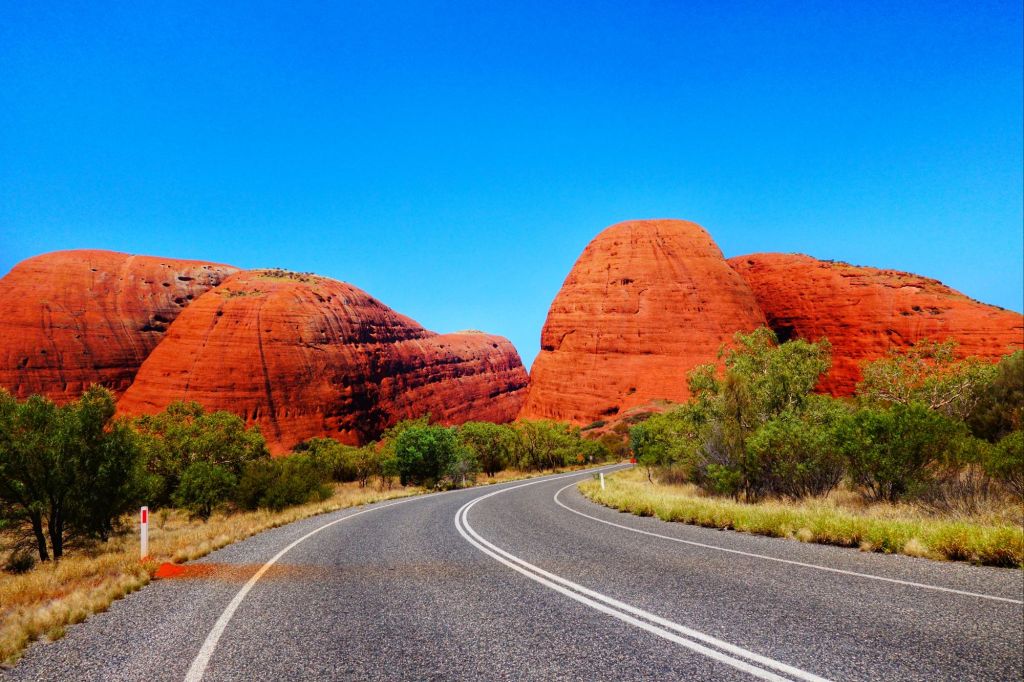
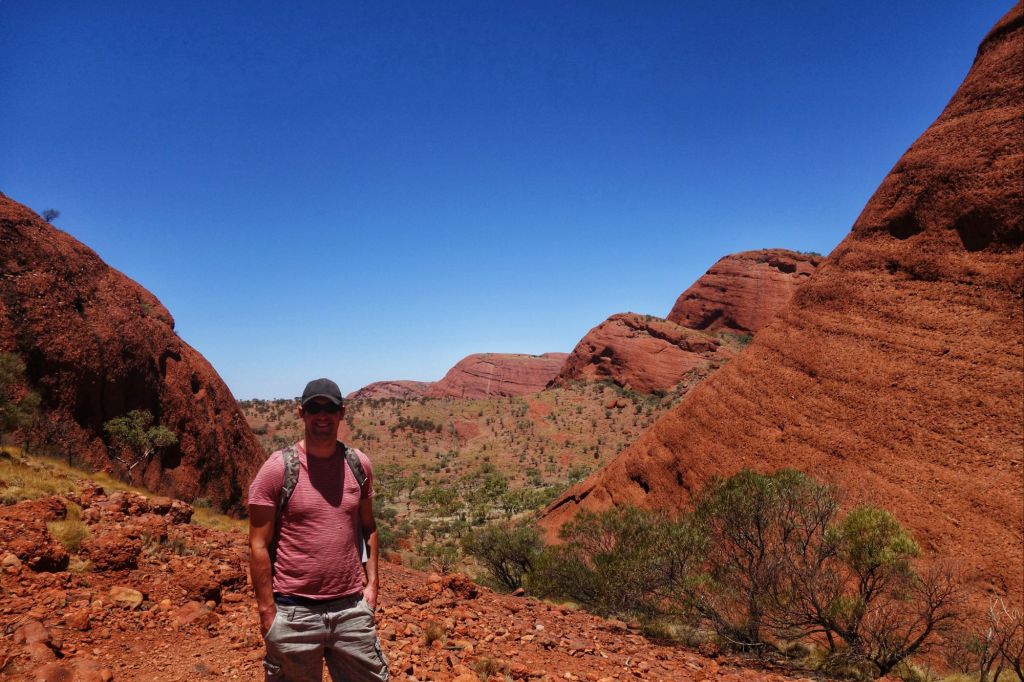
Kata Tjuta is an unusual looking mountain, also known as Mount Olga or The Olgas, are a collection of domestic shaped rock formations approximately 50 kids from Uluru.
We were very keen to visit Kata Tjuta to see the unique views and mountains. Made from the same stone as Uluru, the sandstone changes colour from deep reds and oranges to pinks and cool blues depending on the time of day and sunlight.
The Valley of the Winds is the classic walk through Kata Tjuta, 7.4 k long, approximately 4 hours to complete the loop. You can also walk to the first or second lookout as an alternative to completing the whole loop – see the information here for more details and a route map.
We started off but after only 5 minutes I was beginning to feel faint in the heat, and I was worried we weren’t carrying enough water, so we turned back without completing the walk and getting to the lookout.
It is a lovely and remote place, with some amazing features and rock formations to admire. The Anangu people who are traditional owners of the land ask visitors to respect the area by not taking photographs of the formations and instead experiencing it only in person.
3) King’s Canyon
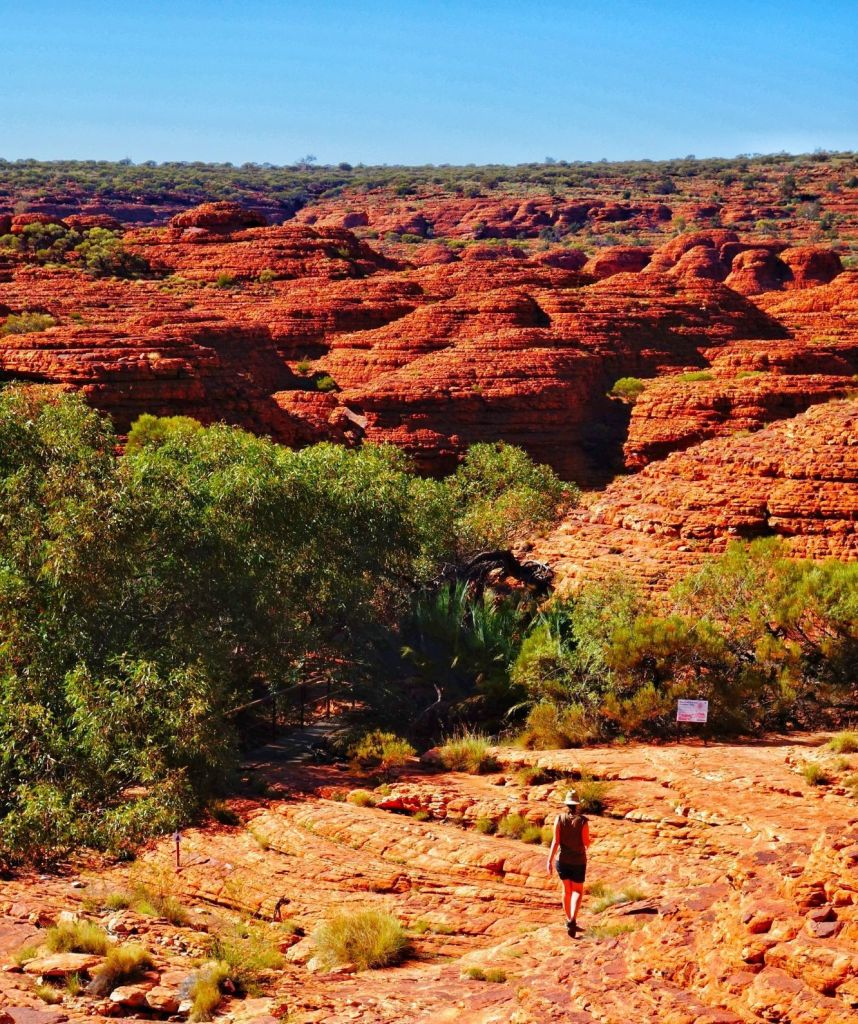
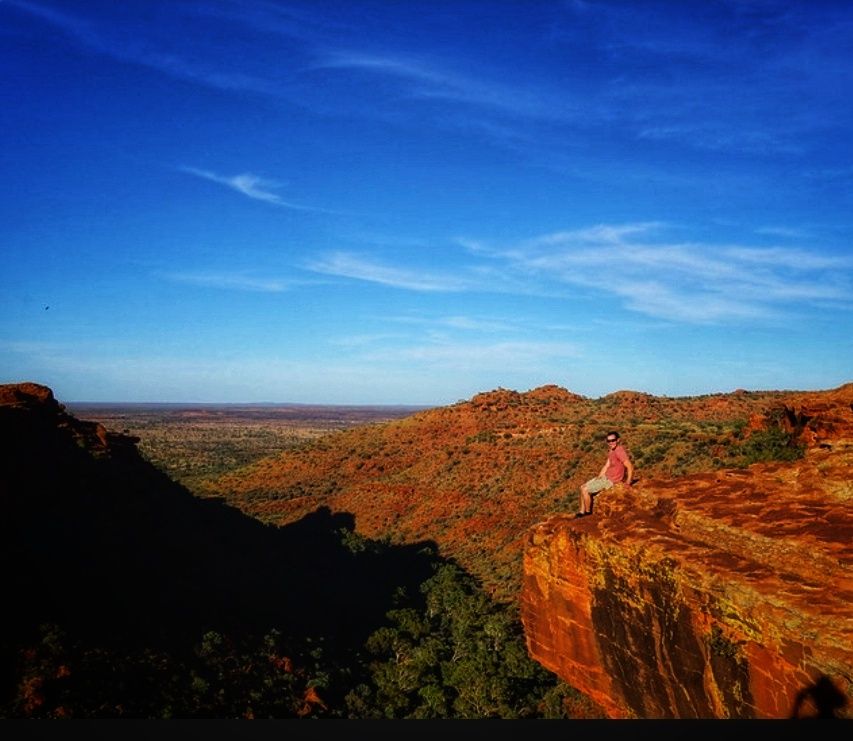
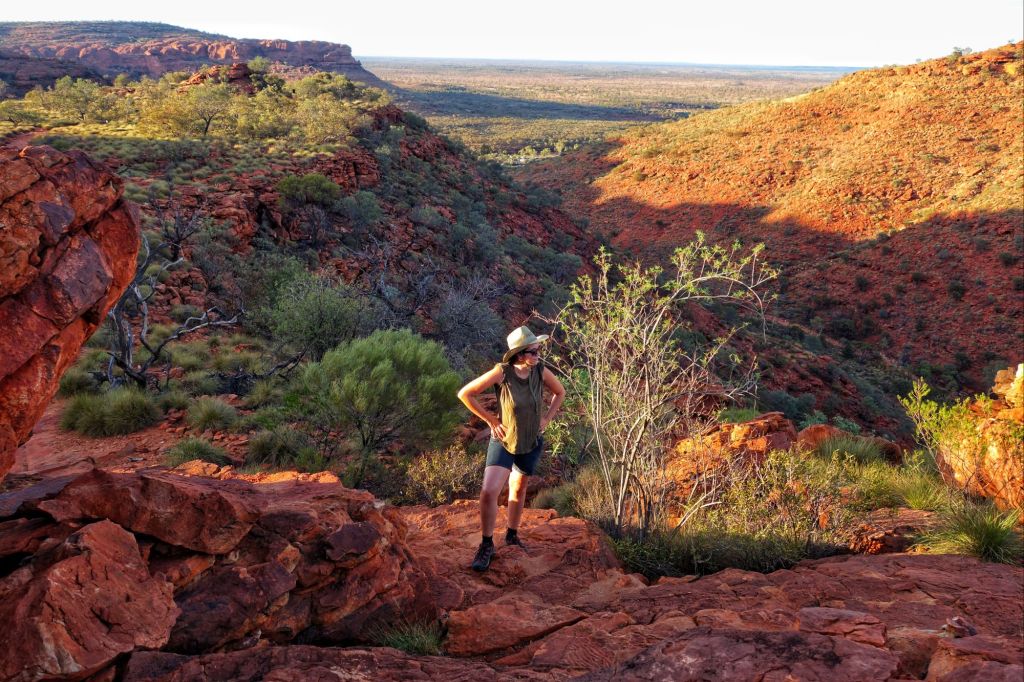
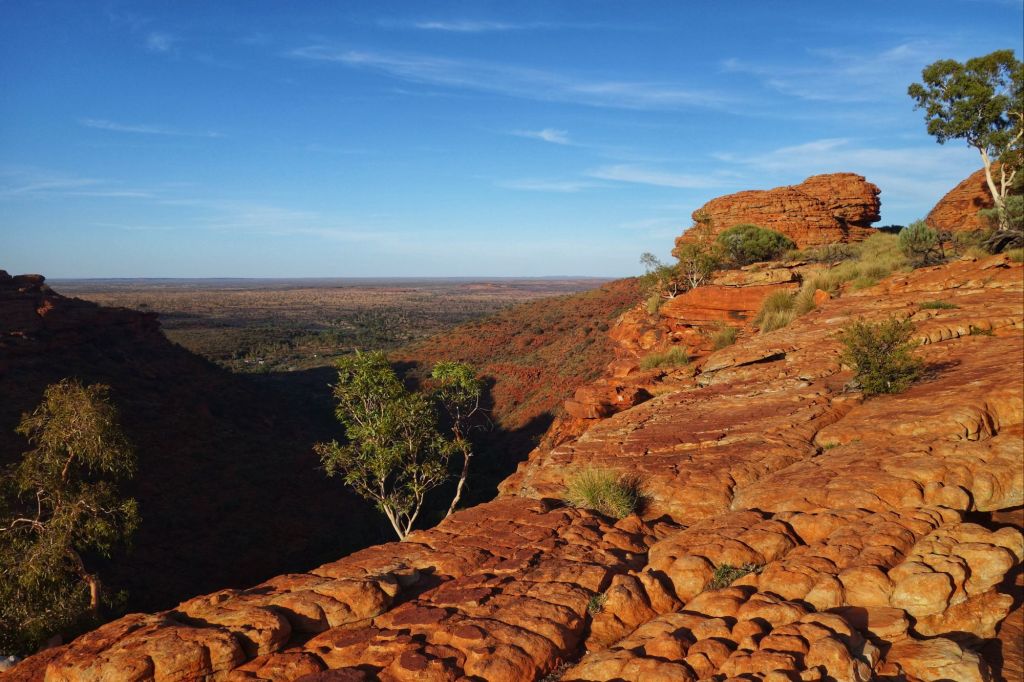
Before travelling to the Northern Territory (NT) I thought the USA was the only home to a large canyon – I was wrong! Australia’s Northern Territory is home to Kings Canyon, a vast sandstone chasm, which is 1000 metres long, and 270 metres deep. Having travelled to both and seen them in person, I can safely say Kings Canyon is just as impressive as it’s more famous US counterpart.
It’s magnificent, not only for the Mars-like remote landscape that stretches on endlessly (as viewed from the Rim walk), but also from the canyon floor, on the King’s Canyon Creek Walk, which has flowering plants and tall trees, making it a shady haven from the harsh enviroment around you.
Another must- do in the area is walking the staircase to ‘ the ‘Garden of Eden’, where the gorge walls tower above you, trees and plants grow, and water flows from waterfalls into natural rock pools and waterholes. This natural attraction is located about halfway around the rim walk – you desend down to the garden of eden on a staircase along the cliff.
We loved the contrast of the two walks- the space, arid views and open skies of the Rim Walk – compared to the sense of being dwarfed by rock, yet surrounded by lush greenery and an abundance of nature on the Creek Walk and the Garden of Eden.

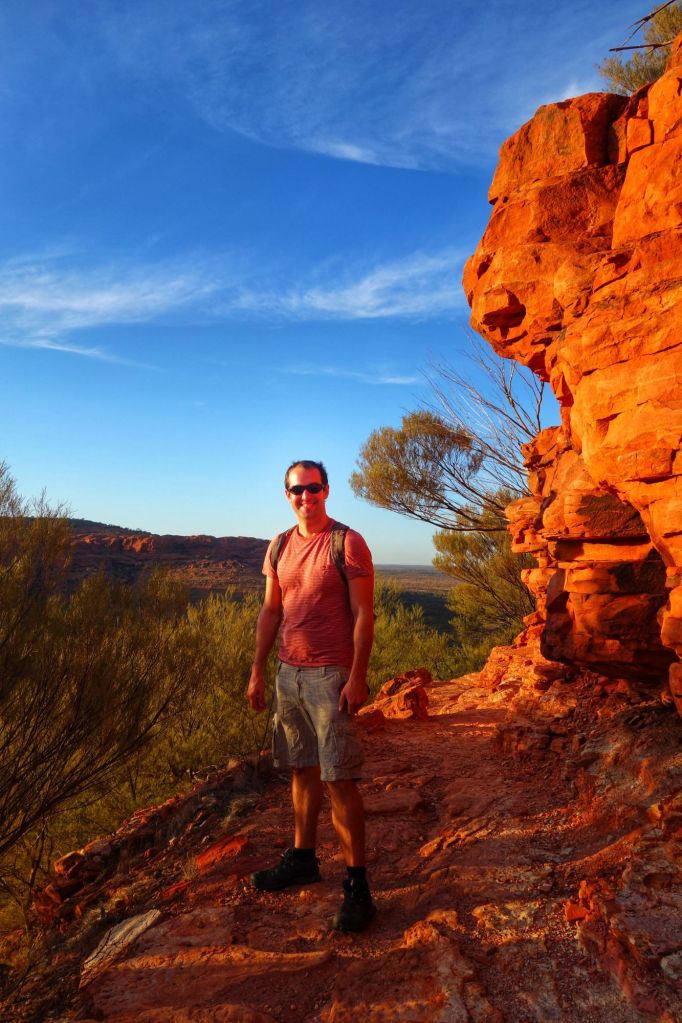
Top tip: You must start this walk early due to the heat – walkers are not permitted to start the trail after 9am. We got up in the dark and we were at the trail head for sunrise. This was perfect as we walked in the most comfortable part of the day, missed the crowds, and watched the sunset come up over the spectacular landscape. Simply amazing.
For more information on the Rim Walk, Creek Walk and Garden of Eden at King’s Canyon, click here.
4.Alice Springs
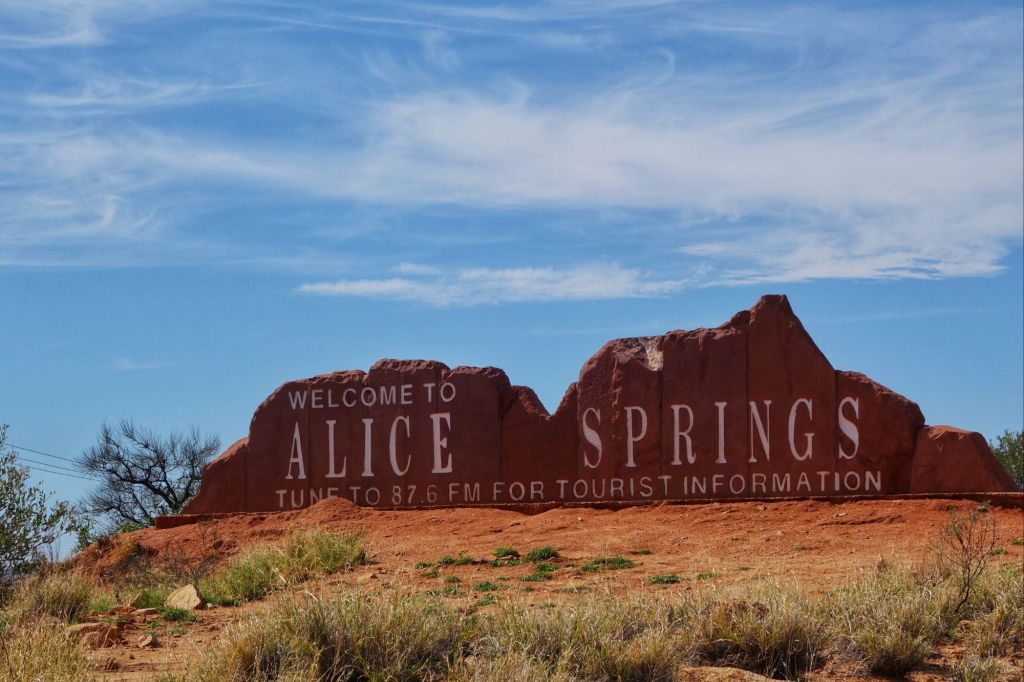
Alice Springs, located in the middle of the Stuart Highway, is the only large town in the Northern territory anywhere near ‘the red centre’ – Uluru, Kata Tjuta, and King’s Canyon. Technically it is still a few hours away from these attractions, but it is likely if you are in the area that you will come to Alice Springs at some point, as a destination for a few days or just passing through. It is also connected by air, you are able to fly in to Alice Springs from other major Australian airports of Darwin, Melbourne, Sydney, Brisbane and Perth.
There are smaller communities around Alice Springs, but this is your best bet for a variety of accommodation, supermarkets, fuel, shopping, and other essentials. There are also a lot of guided tours to the red centre that start from Alice Springs.
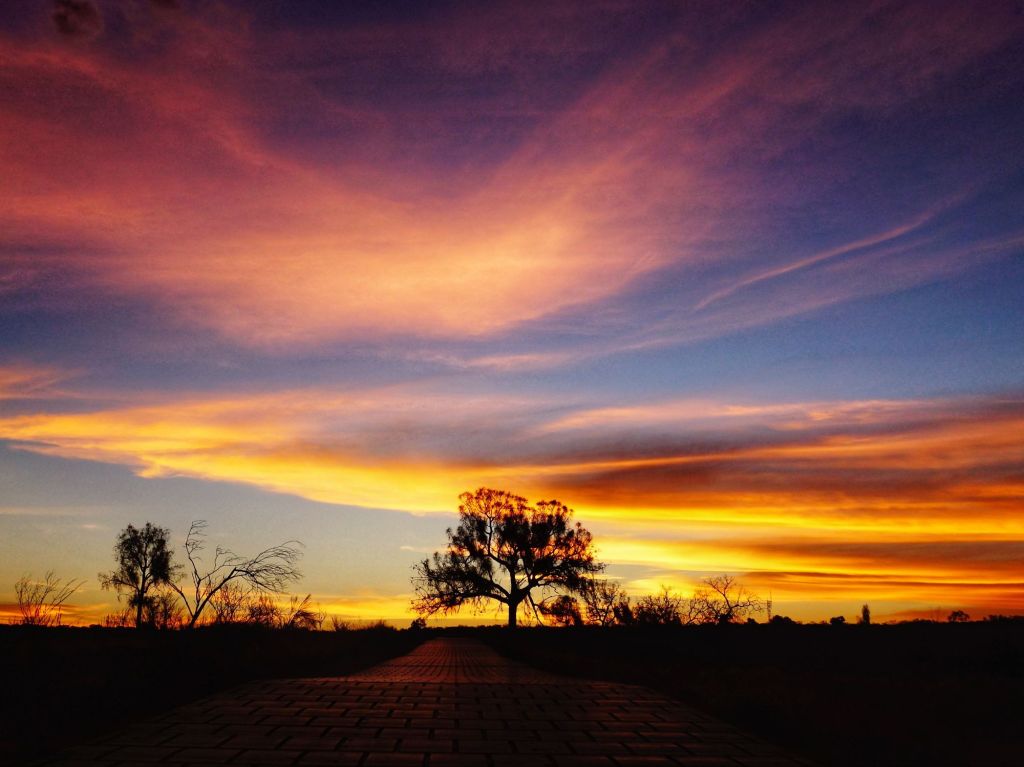
In all honesty, I hadn’t seen anything online that had inspired me to get excited about Alice Springs, and we put it into our itinery as a comfort stop. We surprised ourselves – we really quite liked it, it felt so different to any other big towns we had stayed in. Everything was so RED! There were different things in the supermarkets- crocodile meat and kangaroo tails – and a large indigenous Australian community, making it a cultural hub for Aborginal Art, Galleries and experiences that connect with indiginous culture.
After camping at Uluru, we treated ourselves to a holiday park where we had an air conditioned cabin and access to a swimming pool. It was so hot, it felt tropical, and we really enjoyed our stay here. Swimming in the pool that had been heated by the sun and was as warm as a bath, while watching the vast display of stars and the milky way show itself as night fell, was truly magic and something I will never forget.
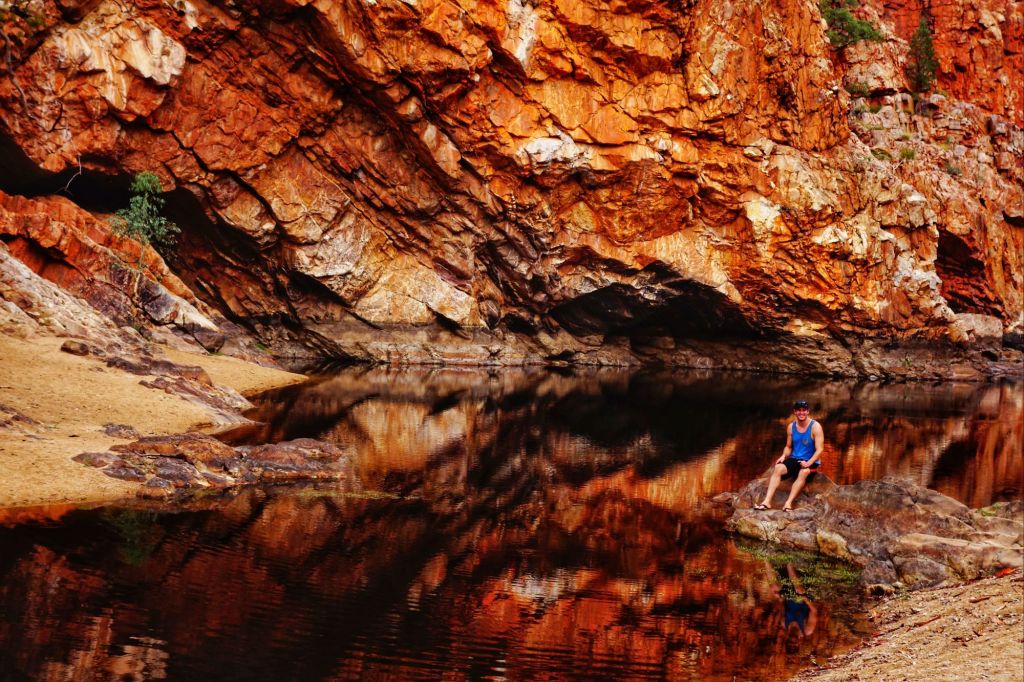
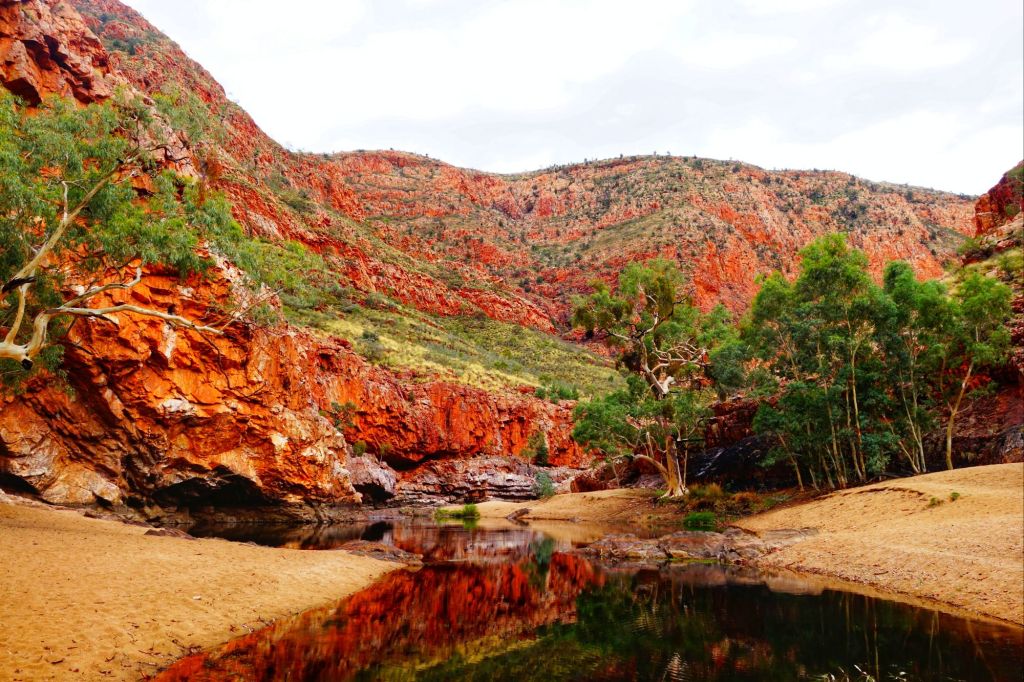
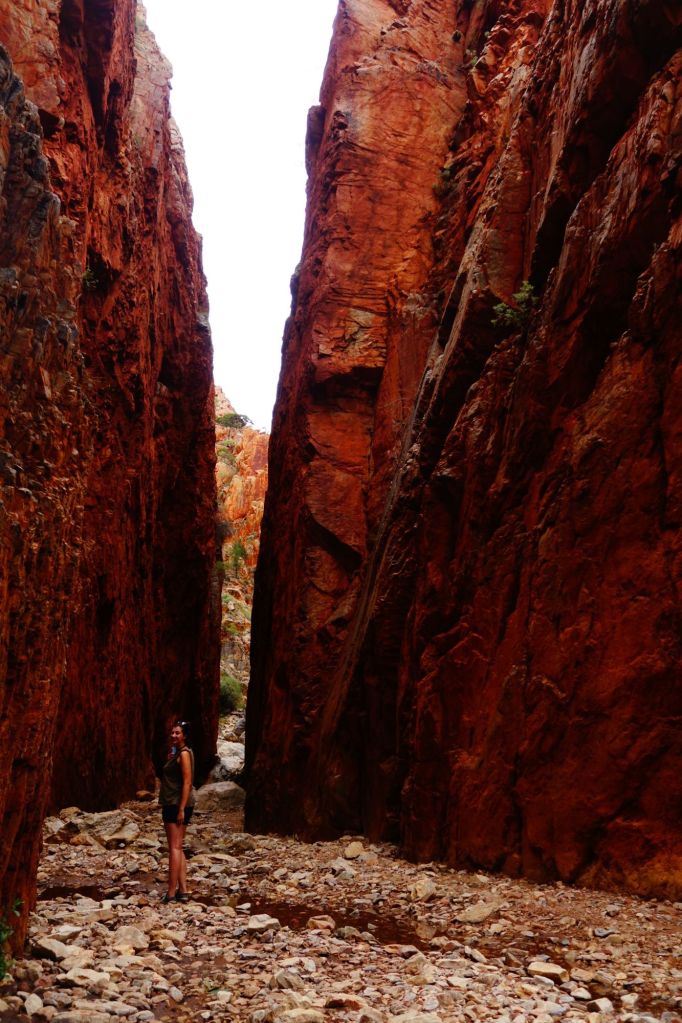
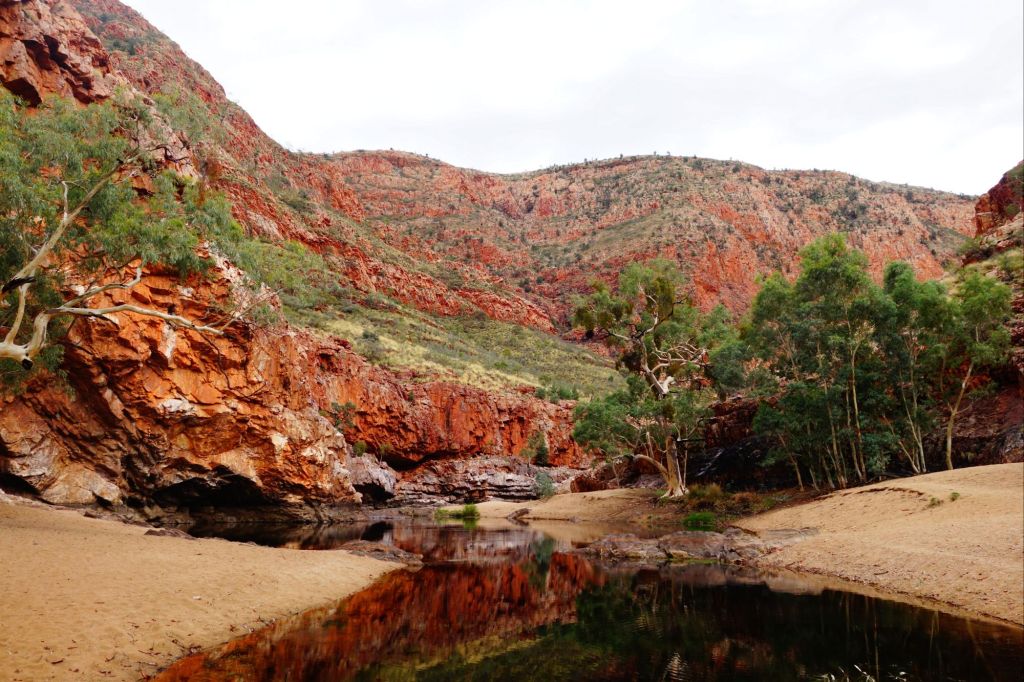
A must-see location when visiting Alice Springs is the MacDonald Ranges. These ancient mountain ranges offer breathtaking scenery, hiking trails, and iconic sites like Simpsons Gap and Ormiston Gorge. We had no idea this was here, we were recommended the trip by reception at our holiday park and had a great day exploring the stunning gorges and swimming holes.
Kakadu National Park
Visiting Kakadu National Park is an unforgettable adventure, packed with stunning landscapes, rich Indigenous culture, and incredible wildlife.
From exploring ancient rock art at Ubirr and Nourlangie to cruising through wetlands teeming with crocodiles and birds, there’s something for everyone. Don’t miss iconic spots like Jim Jim Falls and Yellow Water Billabong, and if you visit in the dry season (May to October), you’ll have the best access to hiking trails and waterfalls.
You don’t always need a 4×4 to visit Kakadu National Park, especially in the dry season (May to October) when most major spots like Ubirr, Nourlangie, and Yellow Water Billabong are accessible with a 2WD. However, if you’re visiting in the wet season (November to April) or planning to explore remote areas like Jim Jim Falls or Twin Falls, a 4×4 is a must. For the best experience, check road conditions before you go!
Termite mounds – one thing we were really keen to see were the giant termite mounds, so.e reaching up to 5.metres in height! They do have termite mounds in Kakadu National Park, where they are dotted around the landscape, but the best place to see giant termite mounds in the Northern Territory is along the Stuart Highway between Darwin and Katherine. These towering, white or reddish mounds are especially prominent in the Litchfield National Park area. The mounds are created by magnetic termites, and their large, distinctive structures make for great photo opportunities.
Kakudu is a brilliant place.to take part in a wildlife tour, where you can go on corodile cruises, spot bird life, wallabies, kangaroos, and other native Australian wildlife. Litchfield National Park and Katherine Gorge are also popular places to join wildlife tours and cruises.
Litchfield National Park
Litchfield National Park, just a couple of hours south of Darwin, is a must-visit destination for nature lovers.
Known for its stunning waterfalls like Florence Falls and Wangi Falls, crystal-clear swimming holes, and the iconic giant termite mounds, it offers a perfect blend of adventure and relaxation.
You can hike through lush rainforests, take a refreshing dip in Buley Rockhole, and explore the unique landscapes of this beautiful park.
Katherine Gorge
Katherine Gorge, in Nitmiluk National Park, is a must-see spot for nature and adventure lovers. With towering sandstone cliffs, stunning waterways, and rich Indigenous culture, it’s perfect for cruising, kayaking, or hiking.



 Travel Happy Family
Leave a comment